

Cultivated meat, grown from animal cells in bioreactors, is now being introduced to diners through restaurant partnerships. These collaborations help brands showcase their products, build trust, and gather feedback before retail expansion. Here's how they work:
- Pop-Up Events: Limited tastings with chefs ensure high-quality first impressions. For example, UPSIDE Foods hosted exclusive dinners and preview events and stay updated on cultivated meat launches featuring cultivated chicken.
- Chef Collaborations: High-profile chefs, such as José Andrés and Dominique Crenn, have featured cultivated meat in signature dishes, enhancing credibility and consumer interest.
- Supply Agreements: Some restaurants, like Huber's Bistro in Singapore, serve cultivated meat on specific days, offering controlled, recurring experiences.
These partnerships allow consumers to try cultivated meat in familiar dishes, learn about its production, and provide feedback, all while addressing production limitations. With over 86% of chefs expressing interest in serving cultivated meat, these efforts are shaping its future in the food industry.
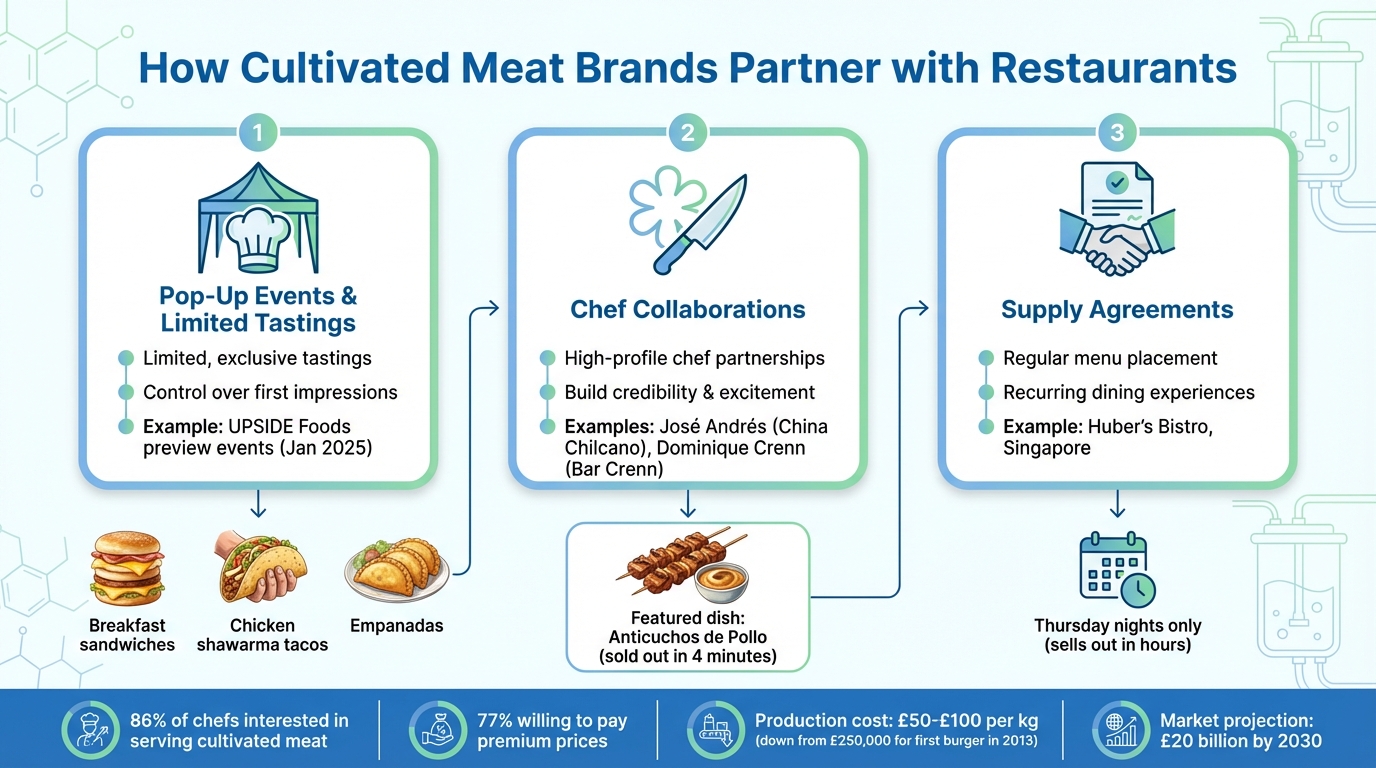
How Cultivated Meat Brands Partner with Restaurants: 3 Key Strategies
How Cultivated Meat Companies Work with Restaurants
Cultivated Meat brands use a range of approaches to introduce their products to restaurants. These methods help them navigate supply limitations while also building trust and familiarity with consumers.
Pop-Up Events and Limited Tastings
Pop-up events and limited tastings give companies control over how consumers experience their products for the first time. By collaborating with skilled chefs, they ensure the meat is prepared and presented in the best possible way. These events are especially useful during the early stages of commercialisation when production volumes are still low.
For example, in January 2025, UPSIDE Foods teamed up with renowned meat purveyor Pat LaFrieda for a preview event in New York City. The event featured dishes like breakfast sandwiches, chicken shawarma tacos, and empanadas, all made with their cultivated shredded chicken and chicken sausage. By presenting these products in familiar formats, the company highlighted how Cultivated Meat could seamlessly fit into everyday meals through LaFrieda's extensive network [6].
"The hope is really to start being able to show people that this product can fit into their lives and into recipes that they already know and love, and not have to change and develop new habits."
- Amy Chen, Chief Operating Officer, UPSIDE Foods [6]
UPSIDE Foods also organised seven exclusive dinner services at Bar Crenn during its initial launch. After this, they adopted a "roadshow" model, bringing their products to various locations to reach more people [8].
Working with Well-Known Chefs
Partnering with high-profile chefs is another effective way to introduce Cultivated Meat. These chefs lend credibility to the products by showcasing their versatility through creative and appealing recipes. This builds consumer confidence and generates excitement.
In July 2023, Good Meat collaborated with Chef José Andrés to debut their cultivated chicken at his Peruvian restaurant, China Chilcano, in Washington D.C. The featured dish, "Anticuchos de Pollo" (marinated skewers), was offered to diners who managed to secure reservations - bookings sold out in just four minutes [4].
"Chefs are the best partners. They understand meats, how to use it, how to explore with it."
These partnerships allow chefs to experiment and create recipes that integrate Cultivated Meat into a variety of cuisines. This demonstrates its adaptability across different cooking styles and culinary traditions.
Supply Agreements with Restaurants
Direct supply agreements with restaurants are another way Cultivated Meat brands are making their products available. These partnerships allow restaurants to feature Cultivated Meat on their regular menus, even with current production constraints. The strategy often starts with recurring collaborations before expanding further.
For instance, in Singapore, Good Meat partnered with Huber's Butchery and Bistro to serve cultivated chicken exclusively on Thursday nights. These limited reservations consistently sell out within hours, showing strong consumer interest in these curated dining experiences [7].
sbb-itb-c323ed3
Why Restaurant Partnerships Work for Cultivated Meat Companies
Collaborating with restaurants offers Cultivated Meat brands a chance to introduce this new food category in a way that balances production challenges with consumer trust. These partnerships place the product in familiar settings where people feel comfortable exploring new food options.
Teaching Consumers About Cultivated Meat
Restaurants create an ideal setting for people to try Cultivated Meat without the pressure of preparing it themselves. Research shows that diners are more inclined to experiment with unfamiliar foods when dining out rather than at home [1]. By incorporating Cultivated Meat into well-known dishes like tacos or skewers, restaurants allow customers to experience the product without stepping too far out of their comfort zones. Additionally, chefs can explain how the meat is produced and why it’s an important innovation.
A survey of US chefs revealed that 86% are interested in serving Cultivated Meat or poultry, and 65% have noticed growing consumer demand for meat alternatives over the last five years [1].
This type of consumer education naturally supports product testing in a real-world setting.
Testing Products and Getting Feedback
Restaurants also play a critical role in gathering feedback before products hit the retail market. Chefs can experiment with various cooking techniques and preparation methods, providing brands with invaluable insights into how their products perform in professional kitchens. This is particularly important for whole-cut items like fillets, which need to meet specific texture and structural standards to satisfy culinary expectations [9]. With their high-value yet low-volume nature, restaurants are a perfect testing ground during the early stages of production [1][9].
The feedback gathered not only helps improve the product but also strengthens consumer trust in its quality.
Building Consumer Confidence
When respected chefs and renowned restaurants endorse Cultivated Meat, it sends a strong signal about its quality and safety. For instance, Dominique Crenn, a three-Michelin-starred chef, brought meat back to her menu for the first time since 2018, specifically because of Upside Chicken.
"It's the first time meat has made it back on my menu since 2018 because Upside Chicken is the first meat that I feel good about serving."
- Dominique Crenn, Chef/Owner, Bar Crenn [5]
This type of professional validation is impactful. In fact, 77% of surveyed chefs expressed a willingness to pay more for Cultivated Meat products [1]. When such products appear on menus at respected establishments, it helps solidify their reputation as a premium, reliable protein choice rather than a fleeting novelty.
Examples of Restaurant Partnerships
Several Cultivated Meat brands have introduced their products through collaborations with restaurants, showing how these partnerships can build consumer confidence in this emerging food category.
Wildtype's Cultivated Salmon with Chefs
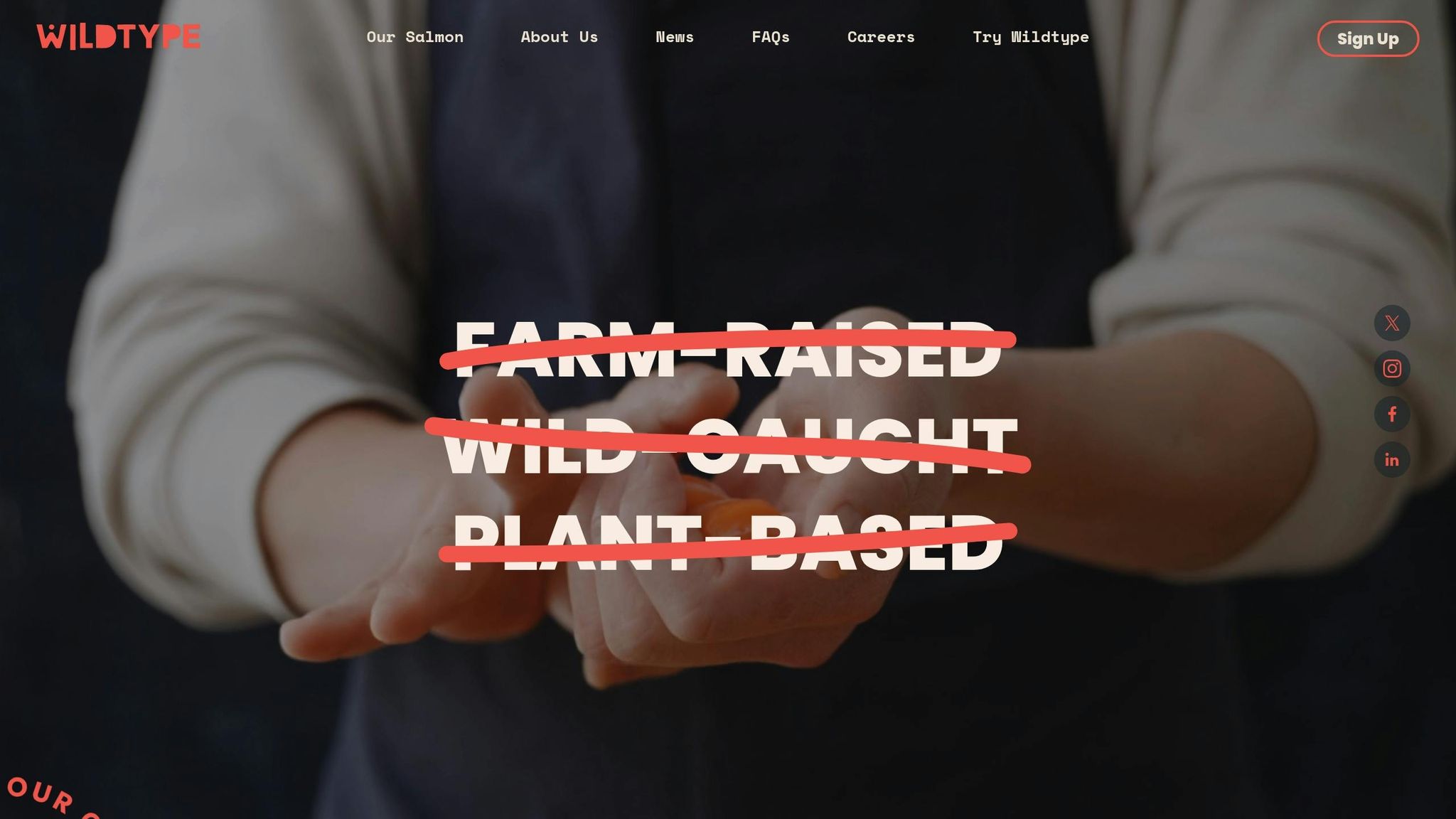
Wildtype has taken a unique approach by creating a "Chef Community" and "Chef Partner" programme to showcase its cultivated salmon in upscale dining environments [10]. In August 2025, Chef Adam Tortosa at Robin in San Francisco started featuring Wildtype's salmon in his personalised omakase and sushi dishes. Around the same time, Chef Yoshi Okai at OTOKO in Austin incorporated the salmon into his Tokyo-Kyoto fusion omakase menu. By introducing their product in such premium, innovative settings, Wildtype aligns its cultivated salmon with high standards of quality and creativity.
Cultivated Chicken at Pop-Up Events
In July 2023, UPSIDE Foods teamed up with three-Michelin-starred chef Dominique Crenn to launch its cultivated chicken at Bar Crenn in San Francisco. Guests at the event were treated to a one-ounce cultivated chicken fillet, prepared with recado negro tempura and burnt chilli aioli, priced at about £36 [9]. This event marked a milestone as it was the first time cultivated meat appeared on a U.S. restaurant menu after receiving USDA approval.
Similarly, Good Meat, a subsidiary of Eat Just, partnered with acclaimed chef José Andrés in 2023 to serve its cultivated chicken at China Chilcano in Washington, D.C. This was one of the earliest commercial introductions of cultivated meat in the United States [9].
These examples highlight how partnerships with high-profile chefs and restaurants can help cultivated meat brands reach consumers in exciting and trusted settings. Platforms like Cultivated Meat Shop are poised to expand and support these efforts further.
How Cultivated Meat Shop Supports Restaurant Partnerships
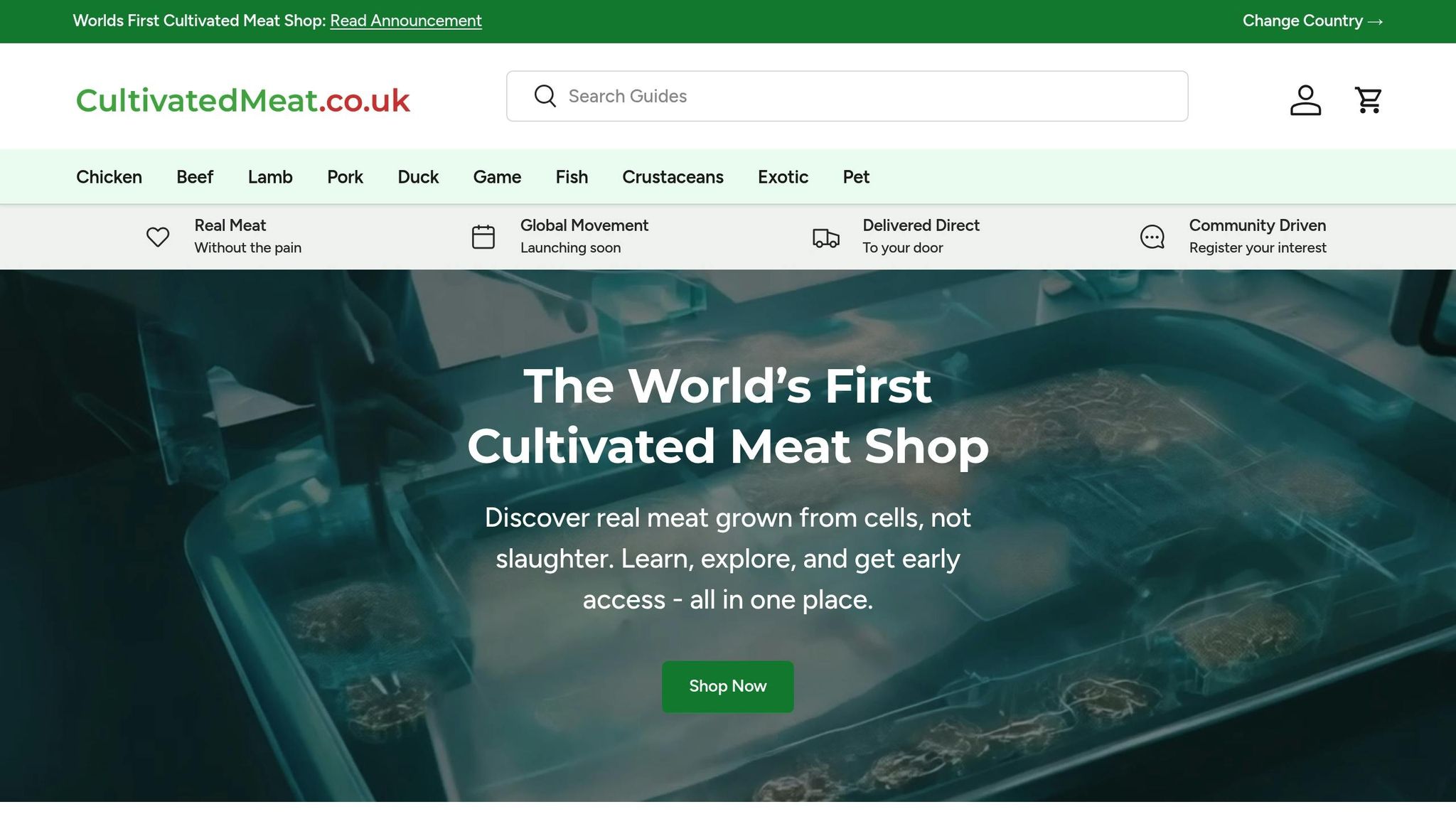
Cultivated Meat Shop plays a key role in setting the stage for consumers to enjoy cultivated meat in restaurant settings. While cultivated meat brands collaborate directly with chefs and restaurants to feature their products, the shop complements these efforts by educating and preparing diners before they step into a restaurant. This approach strengthens the partnerships outlined earlier.
Helping Consumers Understand Cultivated Meat
One of the shop's main goals is to demystify cultivated meat for curious diners. It offers a variety of guides and articles that explain what cultivated meat is, how it tastes, and how to order it. Examples include pieces like "Where to Try Cultivated Meat First" and "7 Cultivated Meat Products with Realistic Texture". These resources aim to build confidence by clarifying that cultivated meat is real animal meat grown from cells, not a plant-based alternative. This transparency helps manage expectations around taste and texture, easing any hesitations diners might have.
The shop also highlights what it calls the "Initial encounter phase", where people are most likely to try cultivated meat at exclusive restaurant events or pop-ups. This explanation helps consumers understand why they might see cultivated meat on fine dining menus before encountering it in supermarkets. Additionally, the platform supports the wider industry by encouraging education for chefs and waitstaff. This ensures restaurant teams can confidently address diners' questions about ingredients, allergens, or the cultivation process [11].
Building Interest Before Products Launch
Beyond education, Cultivated Meat Shop focuses on building excitement for upcoming product launches.
Since cultivated meat products are not yet widely available in the UK or Europe, the platform uses tools like a "Register your interest" feature. This allows visitors to sign up for updates and early access, fostering a community of engaged early adopters. These informed consumers will be ready to seek out cultivated meat dining experiences as soon as they hit the market.
Conclusion
Restaurant partnerships play a key role in helping cultivated meat companies navigate challenges like limited supply, maintaining quality, and earning consumer trust. By teaming up with chefs and well-known dining venues, these collaborations are turning cultivated meat from a scientific novelty into a sought-after ingredient in dishes people already enjoy.
The numbers tell a compelling story: 86% of chefs are eager to serve cultivated meat, and 77% are open to paying more for it. Since 2013, production costs have dropped dramatically - going from around £250,000 for the first cultivated burger to an estimated £50–£100 per kilogram today. With the global industry projected to reach £20 billion by 2030, restaurant partnerships are clearly paving the way for scaling production[1][2][3].
To build on this momentum, Cultivated Meat Shop is working to educate diners before they encounter cultivated meat in restaurants, helping to boost confidence and acceptance as it becomes a regular feature on UK menus.
"The future of meat isn't about replacement - it's about evolution."
And restaurant partnerships are leading the charge in this exciting evolution.
FAQs
Why do cultivated meat brands launch in restaurants first?
Cultivated meat brands frequently make their first appearances in restaurants, and there's a good reason for this. Chefs, known for embracing new food trends, are intrigued by the potential benefits - ranging from reduced impact on the planet to improved animal welfare and health considerations. Restaurants provide the perfect stage for chefs to highlight the flavour, texture, and adaptability of cultivated meat, creating excitement among diners who are often eager to try something new.
This strategy also helps establish cultivated meat as a high-end offering. By starting in restaurants, brands can fine-tune their supply chains, navigate regulatory hurdles, and gain trust in the market - all before venturing into retail spaces.
How do restaurants manage limited cultivated meat supply?
Restaurants are tackling the challenge of limited cultivated meat supply with strategic planning and partnerships. By teaming up with logistics providers, they can maintain reliable cold chains, ensure food safety, and simplify distribution processes. Many brands are also opting for exclusive tastings or partnerships with high-end restaurants as a way to introduce cultivated meat. This approach helps them manage supply, test consumer demand, and raise awareness.
These methods allow for a more controlled and gradual market entry, aligning with the increasing production capacity and ensuring a smoother rollout.
What should I ask staff before ordering Cultivated Meat?
Before you order cultivated meat, it’s worth asking a few questions to make an informed decision. Start by checking where it’s made - find out if it’s produced locally and which facilities are responsible for its production. Make sure it has passed all necessary safety checks and certifications.
Since cultivated meat is a relatively new product, ensure it’s clearly labelled as “cultivated”. Don’t hesitate to ask about its taste, texture, and any potential health benefits, so you know exactly what to expect before trying it.


