

If you’re wondering whether cultivated sausages taste strange, the short answer is no. From what I can see, they should taste meaty, savoury, and much like the sausages you already know.
Here’s the plain-English version:
- Flavour: close to pork, beef, chicken, or lamb sausage, depending on the cells used
- Main difference: usually texture and richness, not the core taste , though producers are still solving taste challenges to perfect the experience
- What matters most: fat, salt, seasoning, and browning
- What people may notice: a bite that is a bit leaner, drier, or more even from end to end
- Why they can feel close: sausages are a ground-meat format, so they are easier to match than a full cut of meat
In blind tastings, many people cannot tell cultivated meat from standard meat. And in one 2022 study on Frankfurt-style cultivated sausages, the first bite was close to the standard version, which points to a familiar snap and firmness.
Quick comparison
| Point | Cultivated sausage | Standard sausage |
|---|---|---|
| Taste | Meaty, savoury, sausage-like | Meaty, savoury, sausage-like |
| Texture | Often close, but can feel more even | Can vary more from bite to bite |
| Juiciness | Depends on fat mix and cooking | Depends on fat content and recipe |
| Richness | Can be a bit leaner in some products | Often richer if fat is less even |
| Cooking result | Pan-frying boosts browning; oven can keep moisture | Same general pattern |
My takeaway: if you cooked one in a fry-up, you’d likely notice the seasoning and meatiness first, as cultivated meat tastes like traditional meat in most respects. Any gap would more likely show up in the mouthfeel than in the main flavour.
sbb-itb-c323ed3
How cultivated sausages taste
Meaty, savoury and familiar
Cultivated sausages are designed to taste like conventional sausages. Because they contain cultivated animal cells, they develop the same meaty, savoury notes people expect, including Maillard reactions when cooked. That matters because a sausage doesn’t just taste of meat on its own. It’s the browning, the fat, and the seasoning all working together.
The aroma comes from the animal’s natural proteins and fats, along with whatever seasoning is used. In blind tastings, people often can’t tell the difference [1]. So the end result isn’t some odd new flavour. It’s a profile that feels familiar, with the meat, fat and spices each doing their part.
Why fat and seasoning matter so much
A big part of what makes a sausage taste like a sausage is fat. Fat carries flavour, adds richness, and gives the sausage its juiciness. It also helps create that lingering aftertaste people link with pork, lamb and other meats. Cultivated fat does the same job. As it melts during chewing, it releases flavour bit by bit, so each bite builds rather than falling flat.
Seasoning matters just as much. Salt, herbs, spices and aromatics such as garlic shape the final taste and help one sausage recipe stand apart from another. The meat cells give you the base. Fat, salt and seasoning are what turn that base into a sausage people know and enjoy.
That same flavour base also shapes how the sausage feels on the plate.
How the texture compares on the plate
Bite, firmness and juiciness
Flavour makes the first impression. Texture is what tells you whether a sausage feels convincing once it hits the plate.
Cultivated sausages are among the easier cultivated products to get close on texture. A 2022 Spanish study on Frankfurt-style cultivated sausages found that the first bite closely matched conventional sausages, suggesting a familiar snap and initial resistance.[3]
When cooked well, such as when searing cultivated meat to develop a crust, cultivated sausages can feel firm, tender and springy - exactly the sort of bite people expect from a proper sausage. The outside gives a little resistance, the centre stays tender, and the filling holds together when sliced. That structure comes down to how the sausage is formed and how cultivated fat improves meat flavour and structure.
Small differences people may notice
This is usually where the small gaps show up. Some products may feel less juicy, with a leaner mouthfeel and a more even interior than a conventional sausage. They can also seem slightly drier on the palate, or less rich, because they do not have the same uneven fat spread.
Most of these differences are subtle. Shoppers are more likely to notice that a sausage feels too dense, too soft or too dry than to point to a clear flavour gap. The texture can also feel more consistent from one bite to the next, partly because cultivated meat is made without the natural variation that can come from an animal's age, diet or stress. In most cases, those differences come down to species, fat ratio and cooking.
What affects the flavour from one product to another
Cultivated sausages don't all taste the same. Species, fat content, recipe format and cooking method all change the end result. Once the base sausage flavour is in place, the biggest shifts usually come from the species used, the amount of fat, and how the sausage is cooked.
Species, fat ratio and recipe format
Species has a bigger effect on flavour than many people think. Beef, chicken and lamb each bring their own taste and level of richness, so cultivated sausages made from those species won't taste the same.
Fat plays a big part too. A sausage with more fat will usually taste richer and juicier. Producers can change the balance of fat cells and muscle cells, and a leaner mix will taste less rich.
Recipe format also changes the result. Some recipes mix cultivated fat with plant proteins, which can shift both texture and how flavour is released. Seasoning blends differ from brand to brand as well. A Mediterranean-style cultivated sausage, for example, might lean on garlic, herbs and subtle spices [1].
Those same ingredients can also change how the sausage browns and how much flavour it gives off in the pan.
Cooking method and browning
How you cook a cultivated sausage matters just as much as what's in it. Browning deepens savoury flavour, and the cooking method affects how much of that browning you get. Pan-frying tends to give more browning and a crisper finish. Oven cooking is gentler and often keeps more juiciness.
Fat content matters during cooking as well. Cultivated fat helps release flavour and creates a succulent mouthfeel as the sausage heats up [2]. That means the same sausage can give off more aroma and crispness from a pan than from an oven.
That's why two sausages can seem similar at heart but still feel different beside a conventional one.
Cultivated sausages vs conventional sausages
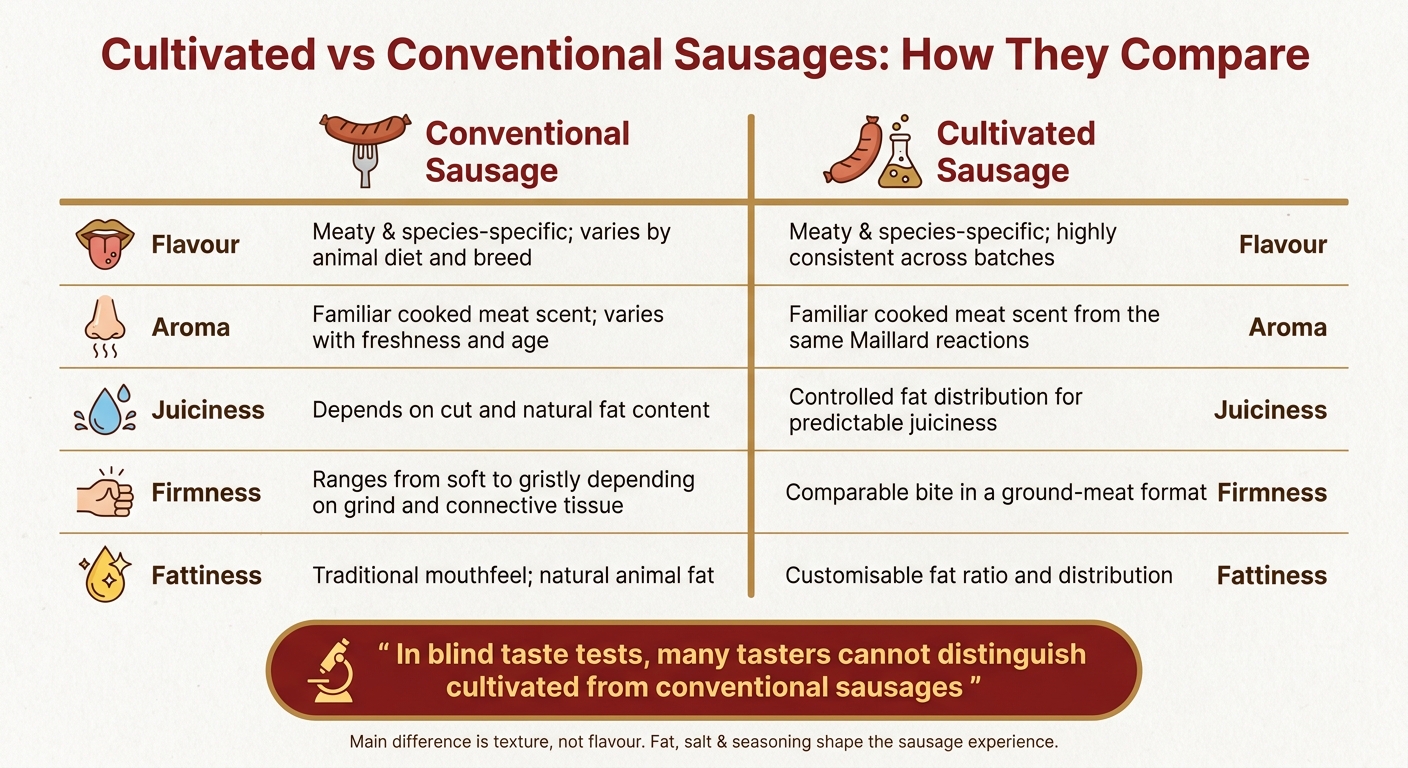
Cultivated vs Conventional Sausages: Taste, Texture & Sensory Comparison
Compared with conventional sausages, the gap is usually smaller than most shoppers expect. Cultivated sausages use the same meat cells, so this is a comparison between cultivated meat and conventional meat, not meat versus a substitute.
Sausages and burgers are the easiest early formats to match closely. That’s why many first products start there. A cultivated pork or beef sausage should taste like a sausage people already know.
One area where cultivated sausages may differ is consistency. They can deliver a steadier fat spread and juiciness from batch to batch. Conventional sausages can shift based on the animal’s diet, breed, and processing. Cultivated versions are less tied to those factors, and fat content can be controlled with more precision [2].
Put simply, the sensory differences look like this:
| Sensory quality | Conventional sausage | Cultivated sausage |
|---|---|---|
| Flavour | Meaty and species-specific; varies by animal diet and breed | Meaty and species-specific; highly consistent across batches |
| Aroma | Familiar cooked meat scent; varies with freshness and age | Familiar cooked meat scent from the same Maillard reactions |
| Juiciness | Depends on cut and natural fat content | Controlled fat distribution for predictable juiciness |
| Firmness | Ranges from soft to gristly depending on grind and connective tissue | Comparable bite in a ground-meat format |
| Fattiness | Traditional mouthfeel; natural animal fat | Customisable fat ratio and distribution |
Conclusion: What shoppers should expect
Cultivated sausages should taste familiar: meaty, savoury and recognisably sausage-like. Shoppers should expect the sort of sausage profile they already know, not something strange or brand new. In blind taste tests, many tasters cannot distinguish between cultivated and conventional meat [1].
A lot of what people think of as “sausage flavour” comes down to fat, salt and seasoning. Those elements shape the richness, juiciness and lingering savoury taste [2]. From there, the recipe does the rest.
The main point of difference is texture, not flavour. Small shifts in fat ratios and processing can still change how the sausage feels when you bite into it [2].
For most shoppers, the practical expectation is simple: a familiar sausage with slight differences in richness and texture.
FAQs
Do cultivated sausages taste exactly like normal sausages?
No. Cultivated sausages don’t always taste exactly like normal sausages.
They’re still made from real meat, so they can come VERY close in both taste and texture. That’s especially true for processed products like sausages, where seasoning, fat, and texture do a lot of the heavy lifting. In blind taste tests, many people struggle to tell the difference.
That said, the flavour can be a bit milder and less bold.
Why might cultivated sausages feel drier or leaner?
Cultivated sausages can come across as drier or leaner than standard ones. A big reason is that early versions often contain less intramuscular fat. Since muscle and fat cells are grown separately, the fat doesn't always blend through the meat in the same way.
They can also miss some of the connective structure that helps standard meat hold onto moisture. Producers are working on better fat integration and scaffold methods to make the texture juicier and more consistent.
Which cooking method makes cultivated sausages taste best?
For the richest, most “meaty” flavour, cook cultivated sausages with dry, high heat. Grilling and pan-searing work best, and you can finish them in the oven if needed.
Why does this matter? These methods trigger the Maillard reaction, usually once the surface gets above about 150°C. That’s what gives you the browned outside, a bit of crispness, and those deeper, more complex flavours.
By contrast, boiling or steaming leads to a milder, softer result.


